
Three Lessons on Great Science Communication
Inspired by Hannah Ritchie’s new book “Not the End of the World”

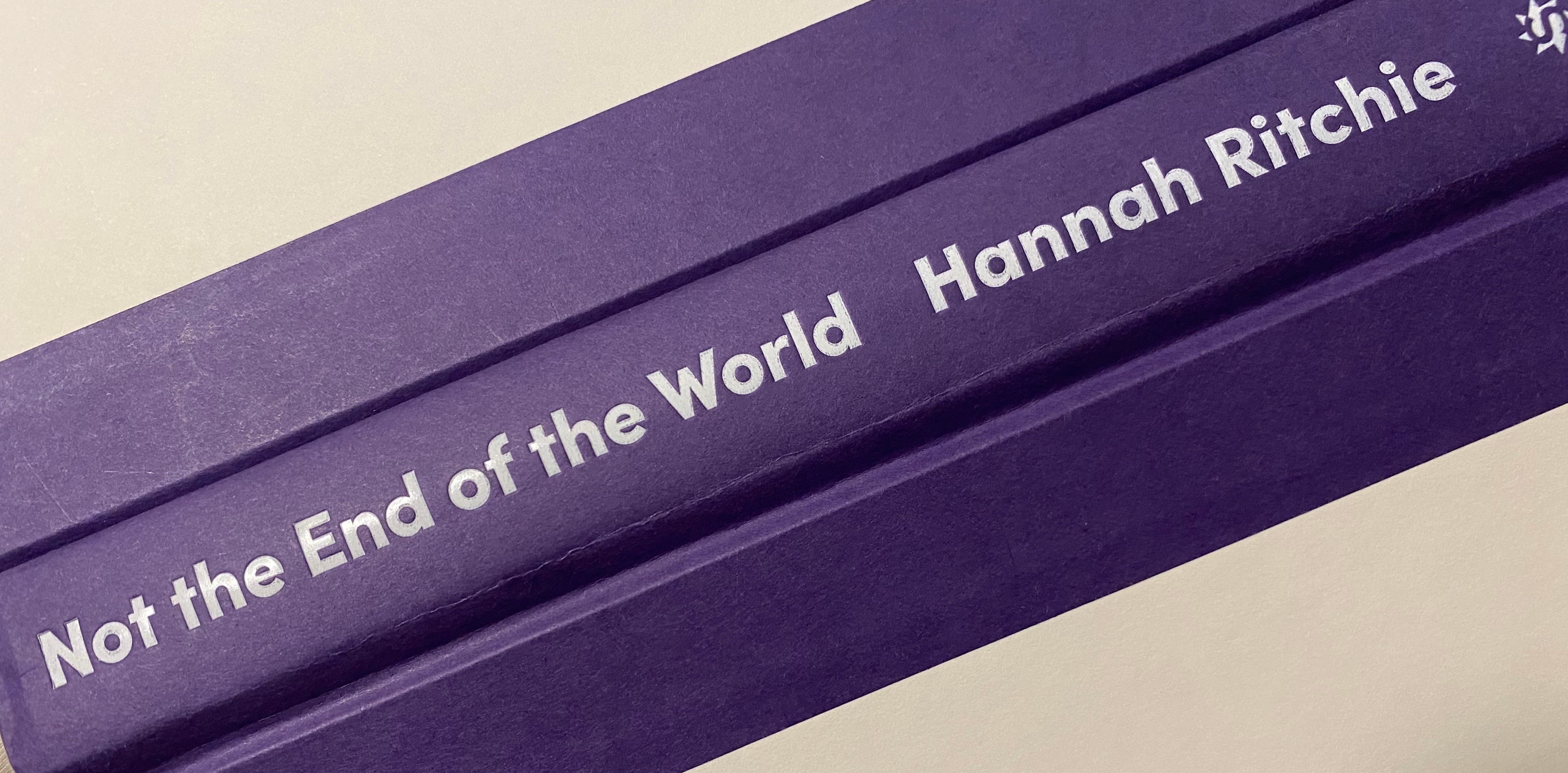
I just finished reading Hannah Ritchie’s book “Not the End of the World”. Hannah is a data scientist and science communicator working for Our World in Data. She also publishes on Substack. Her new book is about global environmental problems and how we can solve them.
I want to share three lessons on great science communication, in which I think Hannah does an excellent job.
1. Factfulness: Ritchie refrains from exaggeration for the sake of attention or a noble cause
Ritchie cares about the environment.
“I spend my life – inside and outside work – researching, writing and trying to understand our environmental problems and how to solve them. The world has lacked urgency to act. Bringing attention to the magnitude of potential impacts is essential if we want things to change.”
You might expect her to paint a gloomy picture of our environmental problems in the starkest colors to get us to act. But she doesn’t. She believes there is “a better, more optimistic and honest way forward”. Which is to let the data and facts speak. Her aim is to provide clear, unbiased information. Motivating action through exaggerated claims, on the other hand, would be short-sighted and undermine this goal:
“If you believe people have the right to the truth, then you should be against these exaggerated doomsday stories. […] it makes scientists look like idiots. Every doomsday activist that makes a big, bold claim invariably turns out to be wrong. Every time this happens it chisels another bit of public trust away from scientists. It plays right into the hands of deniers. […] In nearly every chapter of this book, I’ll list doomsday claims that turned out to be completely untrue.”
2. Approachability: Ritchie puts ‘cold’ data in a personal context
Ritchie is a data scientist. She doesn’t do fieldwork to explore environmental problems. Instead, she sits in the office and looks at numbers. That does not keep her from framing environmental issues in a human and approachable way. Through personal stories, she gives data real-life relevance. For instance, she recounts how she had her best vegan hamburger ever or how differently she and her brother feel about environmental issues.
“My brother – the least environmentally minded member of our family – was the first to buy an electric car. It wasn’t the low-carbon footprint that won him over, it was the beauty of driving one.”
Ritchie also admits to errors. For example, she says that she used to despise palm oil because it was driving deforestation – until she looked into the scientific literature:
“The more I read, the more humbled I became. I had had got this wrong. Palm oil, deforestation and food are complicated problems, and I had been won over by simplistic messages that played on my emotions. When faced with such a problem, it’s tempting to look for a villain. ‘You’re the problem, so once we get rid of you, everything will be fixed.’ Palm oil fitted that role perfectly […] for all its flaws, palm oil has actually been a ‘land-sparing’ crop, at least in a world that demands lots of vegetable oil. It gets bad reputation, but it is surely the best of a bad bunch.”
3. No moralizing
Ritchie certainly has her own opinion on what to do about our environmental problems. However, she acknowledges that opinions and actions are informed by facts but not determined by them. Instead of telling readers what they should do, she tells them what they could do. For example, when it comes to their diet:
“I don’t want to tell people what to eat. It’s none of my business. At the same time, I do want to give clear and straightforward answers to the basic questions of how we can eat more sustainably. I want to give people the information they need to make an informed decision, then leave them to do so based on what they value. If they don’t care about the carbon footprint of their diet, that’s fine with me. What I find painful is when people really do care about eating sustainably, but they’re making choices based on poor information, putting effort into all the wrong places.”
In this post, I have highlighted three aspects of how Hannah Ritchie communicates science in her book “Not the End of the World”. Of course, what she communicates is at least as interesting. Ritchie covers seven global environmental problems and offers realistic, data-based options for solving them: air pollution, climate change, deforestation, food, biodiversity loss, ocean plastics, and overfishing. I recommend you read the whole book. If that takes too much time, watch her recent 14-minute TED talk instead.
Thanks for reading. Please leave a comment and share your thoughts!